

Erase PTSD Now Podcast Expands the Conversation Around Trauma, PTSD, Health and Recovery
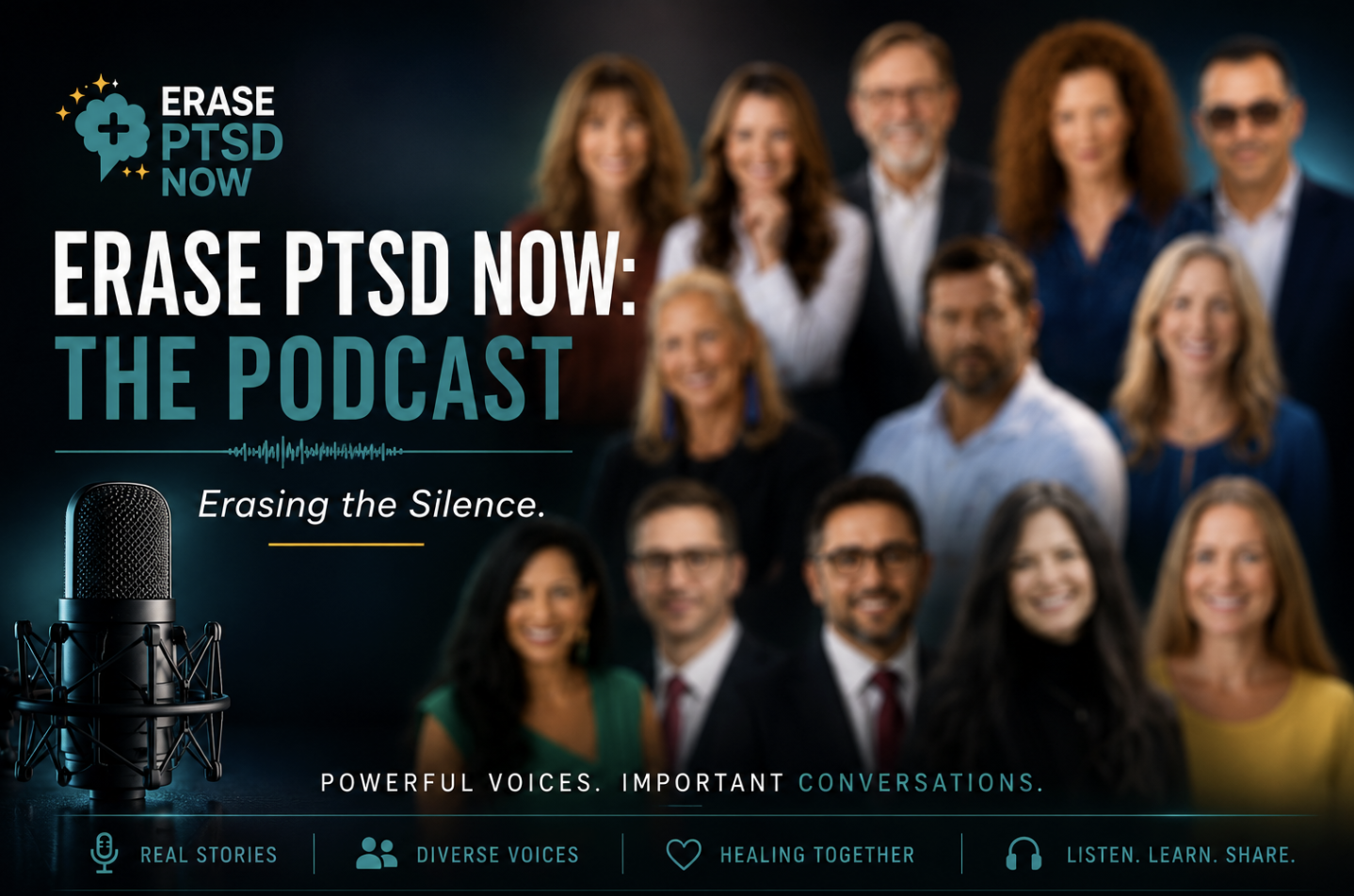
Featured voices from Erase PTSD Now: The Podcast, a conversation series exploring trauma, healing, resilience, and pathways to recovery.
Real stories, emerging research and diverse perspectives come together in conversations about how our physical and emotional health intersect.
CHICAGO, IL, UNITED STATES, August 12, 2026 /EINPresswire.com/ -- A woman navigating menopause may struggle with disrupted sleep, difficulty concentrating, anxiety or irritability. Someone living with the effects of trauma may describe some of those same experiences. They are very different conditions, but the overlap raises an interesting question: Why can different experiences affect our bodies, minds and everyday lives in surprisingly similar ways?That curiosity is at the heart of Erase PTSD Now: The Podcast, - Erasing the Silence, a podcast bringing together people with lived experience, veterans, clinicians, advocates, authors and change makers for candid conversations about trauma, health, relationships, treatment and recovery.
“We tend to put health into separate boxes, mental health, physical health, pain, women's health and relationships, but people don't live in boxes,” said Coleen LaCosta, Executive Director of Erase PTSD Now. “What happens in one part of our lives can affect so many others.”
A Procedure With a Much Longer Medical History. Stellate Ganglion Block, commonly known as SGB, provides one example of why those connections are worth exploring. Although SGB has gained attention for its potential role in reducing symptoms associated with post-traumatic stress, the procedure itself is not new and did not originate as a PTSD treatment.
SGB has a long history in medicine and has been used and studied in pain management, including conditions involving the sympathetic nervous system. Research has also explored SGB for non-pain conditions, including menopausal hot flashes and post-traumatic stress. A recent review of non-pain indications found evidence supporting consideration of SGB for menopausal hot flashes in certain circumstances, while emphasizing that the strength of evidence varies considerably depending on the condition being studied.
Research into SGB for PTSD symptoms has also continued to develop. A multisite, blinded, sham-controlled randomized clinical trial published in JAMA Psychiatry found a significantly greater reduction in PTSD symptom severity over eight weeks among participants receiving SGB compared with those receiving a sham procedure. The researchers also emphasized the limitations of the study and the need for additional research.
The science and evidence are not identical for every condition, nor is any single procedure an answer for every person. What these different areas of research do illustrate, however, is why conversations about the relationship between physical health, emotional health and the nervous system are increasingly interesting and why asking questions across traditional medical boundaries can matter.
Trauma Doesn't Always Come With a Diagnosis. That broader perspective matters when talking about trauma as well. Experiencing trauma and having a formal diagnosis of PTSD are not the same thing. The National Institute of Mental Health notes that people can experience a range of reactions after trauma, including anxiety, sadness, anger, difficulty concentrating and problems sleeping. Most people will see those reactions diminish over time, while some experience persistent symptoms that interfere with everyday life and may ultimately be diagnosed as PTSD.
That means there is also an important population that can disappear from everyday conversations about trauma: people experiencing its effects who have never received a formal PTSD diagnosis. Some may never seek an evaluation, some may have symptoms that do not meet the full diagnostic criteria for PTSD, and others may simply not recognize that what they are experiencing could be connected to trauma.
A diagnosis is important clinically, but the effects of trauma do not begin with a diagnostic label. For a veteran or first responder, trauma may be connected to service. For someone else, it may follow sexual assault, childhood experiences, domestic violence, a serious accident, loss or another life-changing event. Trauma can affect emotional and physical well-being; chronic pain can take an emotional toll; menopause can affect sleep, mood and cognition; and disrupted sleep can ripple into relationships, work and quality of life.
Those intersections are exactly where Erasing the Silence wants the conversation to go.
More Voices, Better Questions. Rather than focusing exclusively on one diagnosis or one treatment, Erasing the Silence brings different voices and experiences to the microphone. Conversations explore PTSD and trauma alongside relationships, resilience, pain, women's health, advocacy, mental health and recovery, with guests ranging from people with lived experience to veterans, clinicians, advocates, authors and other leaders working to make a difference.
There is no expectation that every guest will arrive at the same answer. In fact, that is part of the point. “We learn something from every person who sits down with us,” LaCosta said. “Sometimes helping starts with treatment. Sometimes it starts with information or connection. And sometimes it starts because you hear someone else's experience and realize there may be something you haven't considered before.”
Erase PTSD Now works to reduce barriers that prevent people affected by trauma from accessing care while supporting research, education and greater awareness of post-traumatic stress. Erasing the Silence extends that mission through conversation creating a place to listen, learn, ask better questions and keep talking about subjects that too often remain silent.
About Erase PTSD Now. Erase PTSD Now is a nonprofit organization dedicated to expanding access to innovative trauma care, supporting research and raising awareness of post-traumatic stress. The organization works to reduce financial and systemic barriers that can prevent people affected by trauma from accessing care.
Learn more about Erase PTSD Now and listen to Erasing the Silence at ErasePTSDNow.org.
This release is for educational and informational purposes only and is not intended to provide medical advice, diagnosis or treatment recommendations.
Coleen LaCosta
Erase PTSD Now
+1 773-683-1211
email us here
Visit us on social media:
LinkedIn
Instagram
Facebook
YouTube
TikTok
X
Legal Disclaimer:
EIN Presswire provides this news content "as is" without warranty of any kind. We do not accept any responsibility or liability for the accuracy, content, images, videos, licenses, completeness, legality, or reliability of the information contained in this article. If you have any complaints or copyright issues related to this article, kindly contact the author above.
